Invention Coach:
Public Inventor(s):
Roy Phillips, Sanchay Devnath, Nipul Avduth, Guillaume
Previous PIs:
Jeff Lin
Main Link:
Motivation:
Origin of Concept
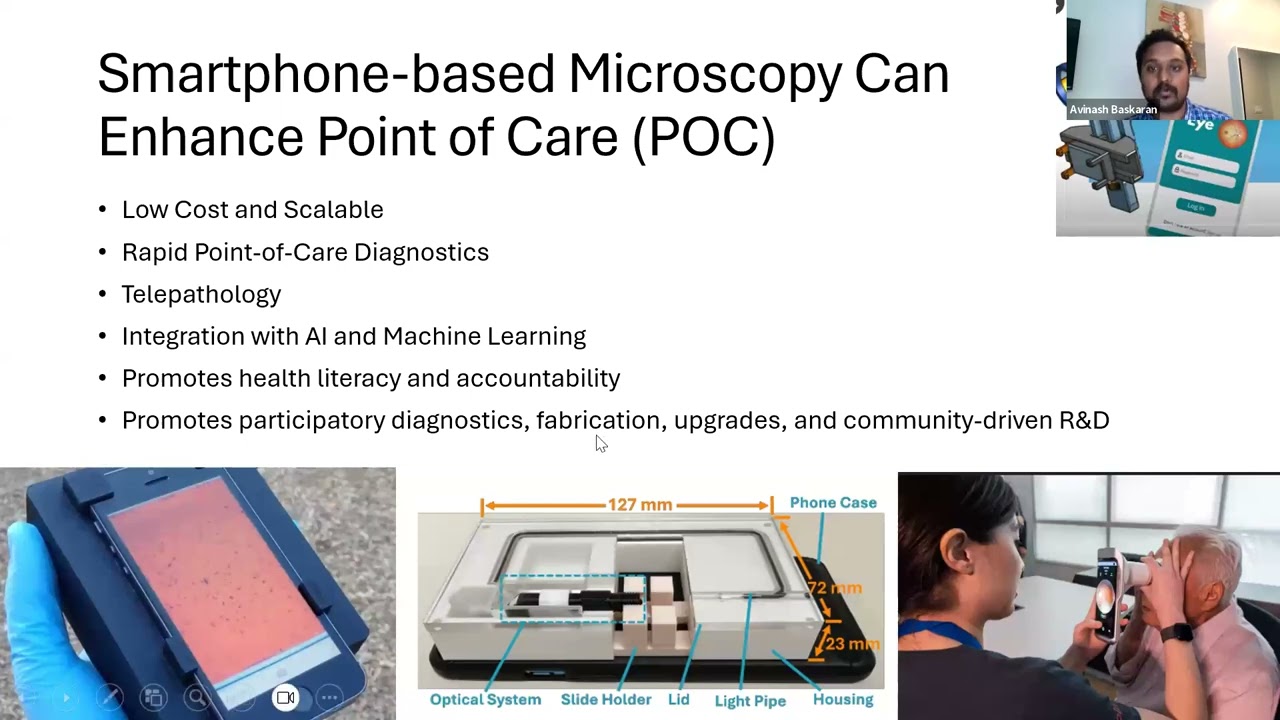
Modern diagnostic devices are often expensive, proprietary, and designed to perform a single task, making them inaccessible or impractical in many low-resource clinical and field environments. At the same time, advances in AI-powered image and signal analysis offer enormous potential for rapid, accurate point-of-care diagnostics but researchers and innovators frequently lack a unified, open platform for collecting data, integrating sensors, and deploying algorithms. Librecorder was created to bridge this gap: to provide a flexible, open-source foundation that replaces a patchwork of standalone tools with a single, extensible system for capturing, organizing, and analyzing diagnostic data. By lowering technical barriers and reducing redundant engineering work, the project empowers clinicians, public-interest technologists, and researchers to focus on what truly matters: developing and validating new diagnostic methods that can improve healthcare access and outcomes worldwide.
Story:
Status:
Skills Needed
1. Software Engineer (Backend / Systems)
Skills needed:
-
HTTP and REST fundamentals, JSON message structuring, Simple API design, event-driven data flow understanding, modular system design, light integration testing
What they support:
Designing the simple communication protocol and building the backend glue that connects classifier ↔ server ↔ browser.
2. Machine Learning Engineer / Data Scientist
Skills needed:
-
Understanding classifier inputs/outputs, designing abstraction layers around models, pre-processing and post-processing concepts, handling model confidence and error outputs, versioning and reproducibility best practices
What they support:
Preparing the classifier so it can be plugged into the system in a predictable, modular way.
3. Front-End / Web Developer
Skills needed:
-
Consuming APIs from the browser (fetch/async), basic UI/UX for technical tools, browser-side state management, displaying structured results clearly, understanding how WebSockets or polling works (conceptually)
What they support:
Creating the browser tool that interacts with the backend, visualizes predictions, and demonstrates the communication protocol in action.
4. System Architect (optional but valuable for POC)
Skills needed:
-
High-level system design, separation of concerns (UI ↔ backend ↔ classifier), designing modular, replaceable components, ensuring scalability paths even for a small prototype
What they support:
Ensuring the entire system fits together cleanly and remains maintainable as the project grows.
5. QA / Test Engineer (light involvement)
Skills needed:
-
Designing simple test cases for protocol behavior, regression checks for classifier outputs, end-to-end interaction testing in browser
What they support:
Verifying the POC works consistently and produces predictable behavior.
6. UX/UI Designer (User Surveys & Studies Focus)
Skills needed:
-
User research methods (interviews, surveys, contextual inquiry), usability study design and execution, journey mapping and task analysis, low- and high-fidelity prototyping, accessibility and interaction design principles, translating user insights into actionable requirements
What they support:
Ensuring the browser tool and workflow are aligned with real user needs and validating how clinicians/researchers interact with the system through structured studies.
Collateral
Phase 1 — Core Foundations (MVP Collateral)
-
Project overview, motivation & problem statement, high-level system architecture diagram, basic communication protocol overview, classifier integration summary, developer onboarding README, user personas (initial), and simple browser demo
Phase 2 — Functional Expansion
-
Detailed module interaction diagrams, API overview, data flow maps, low-fi UI wireframes, user research plan & survey templates, usability study plan, sample data sets (synthetic or open), and basic user manual/FAQ
Phase 3 — Validation & Community Engagement
-
Usability study reports, hi-fi UI prototypes, case studies & example workflows, demo video or interactive walkthrough, website/landing page, slide deck for conferences & funders, impact statement, and responsible AI & ethics overview
Phase 4 — Maturity & Sustainability
-
Full design system/UI standards, maintenance & governance model, version release notes, extended documentation (hardware, sensors, advanced setup), open-source community guidelines, budget & funding package, post-study insights & long-term roadmap
Photo Gallery


Video