Megan Cadena has been a part of Public Invention nearly since its inception, and is a crucial Invention Coach as well as a cornerstone of the administrative team. Over the years, she has fostered a community of fellow technologists and innovative enthusiasts that continues to flourish.
In a recent interview, Cadena shared her experiences working with Public Invention during its early days, her current projects, and her regular tasks as an admin. She also shared her views on the open-source mission in general, as well as the importance of community.
Early Public Invention
As a biomedical engineering student at the University of Texas at Austin, Cadena first learned of the organization through friend and fellow Inventor Avinash Baskaran. During Cadena’s sophomore year, while searching for research opportunities outside of an academic setting, Baskaran’s description of Public Invention caught her interest.
“I was looking for something that offered more independence with the design of the research experiment under the guidance of some expert but in a nontraditional research setting,” Cadena shared. “I wanted to confirm if grad school was for me while also experiencing what ownership of a research project and paper felt like. That's what ultimately led me to Public Invention under Dr. Robert Read (Mentor, Head Invention Coach, and Founder of Public Invention).”
At the time, the nonprofit existed in an early, grassroots stage. Public Inventors met in Founder Robert Read’s basement to work on projects, papers, and discuss new ideas. Cadena described it as a makerspace-style room, full of soldering kits, resistors, and a vibrant, tinkerer’s aesthetic.
This formative environment afforded Cadena and other Inventors the opportunity to work closely with Read, who allowed them to work independently on projects and make real progress.
“I would spend my Fridays either coding virtually with him all night, or we would meet in person and work on math and project tasks,” Cadena remembered.
She also described the organization’s unique environment, which was driven by passion, excitement, and a distinct sense of community.

“It started very intimate and honest,” Cadena said. “You knew everyone in the organization and everyone was happy to be there, passionate, and wanting to connect through the skills they could offer. That was the original Public Invention.”
Cadena’s first projects were largely theoretical, including a JavaScript simulator that represented a soft robotic Stewart-platform and a design for a soft, rugged robotic effector arm for use in search and rescue or self-intubation applications. This project influenced Cadena to return to volunteer research through her recent efforts with the Librecorder Project.
Invention Coach: The Librecorder
In 2025, Cadena and Baskaran began the Librecorder project, an open-source biomedical analysis tool. It aims to integrate different hardware and data collection tools to an environment hosting microscopy data and machine-learning classifier models that will process various data collections for prediagnostic and educational applications.
The team hopes to refine the current system to help with women’s health and environmental monitoring scenarios in rural Alabama. Additionally, they have plans to optimize it as a medical simulator platform for medical students to improve in histology and pathology skillsets. They plan for researchers, medical professionals, and educators to use this tool freely and openly.
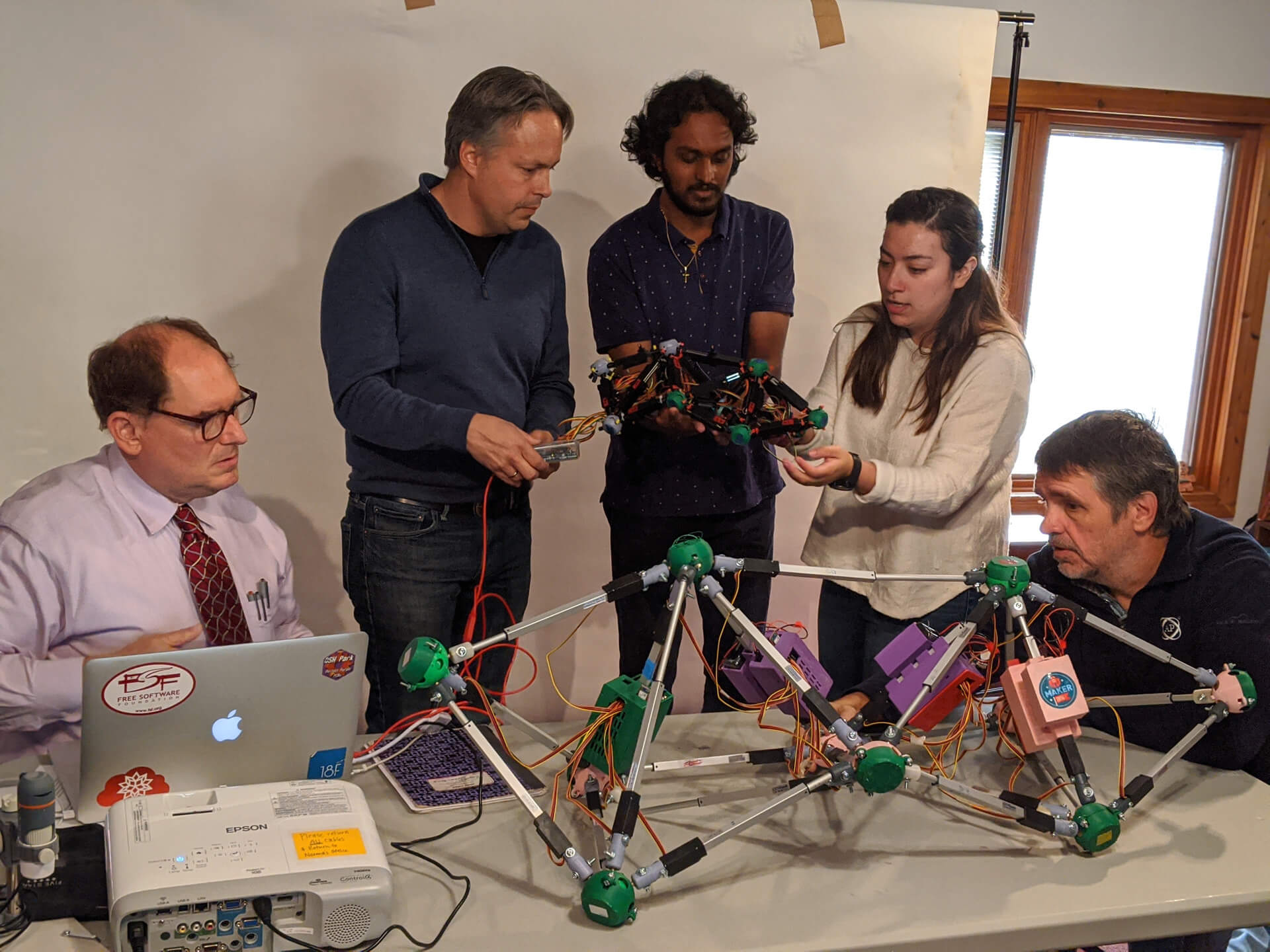
As an Invention Coach, Cadena has worked closely with the team and its volunteers, many of whom are new to Public Invention and open-source work. Cadena shared more about their varied backgrounds and the expertise they bring to the Librecorder.
“It's really cool to work on such a diverse team of different backgrounds. You have the electromechanical design ownership and software integration led by Avinash [Baskaran]. You have someone with Roy [Phillips]’ background in machine learning. Then my [role] as project manager and supporting project lead for this team,” Cadena said. “Also, I work with Nipul [Avduth] and Sanchay [Devnath], who are talented in the field of programming, especially with classifiers.”
The Librecorder continues to develop under Cadena and Baskaran’s joint leadership, and the team is currently working on refining the browser tool for target demographics, user testing, and future encryption capabilities which will complete their minimum viable product.
In the meantime, the team is recruiting volunteers with AI and LLM experience. If any of these fields are of interest, reach out to Megan Cadena to learn more.
The Outreach Coordinator Role
Beyond the Librecorder, Cadena is also currently Public Invention’s Outreach Coordinator. While Cadena continued to work with Public Invention as it expanded and onboarded more volunteers, Read eventually asked if she would be interested in working in an administrative capacity alongside her Inventor work. Public Invention’s previous technical writer had recently left, and the organization had availability and a need for someone to keep project GitHubs up to date, and to provide general support for the organization.
“I had just graduated undergrad, I had done about two years of unpaid research as one of the early volunteers, and I really loved the organization,” Cadena remembered. “When [the previous admin] left, there was a role to be filled. And so [Read] approached me about it one on one.”
Since taking on the role, Cadena noted that she has learned many skills outside her usual engineering capacity. Her new skills range from graphic design to Mailchimp, WordPress management to Overleaf, and conference planning to documentation. Additionally, she has continued to learn and develop her leadership capabilities.

“It's honestly very rewarding because I feel like [Read] supplied honest tutelage to grow me and other staff members, by giving us projects that pushed and challenged us to utilize new skillsets,” Cadena said.
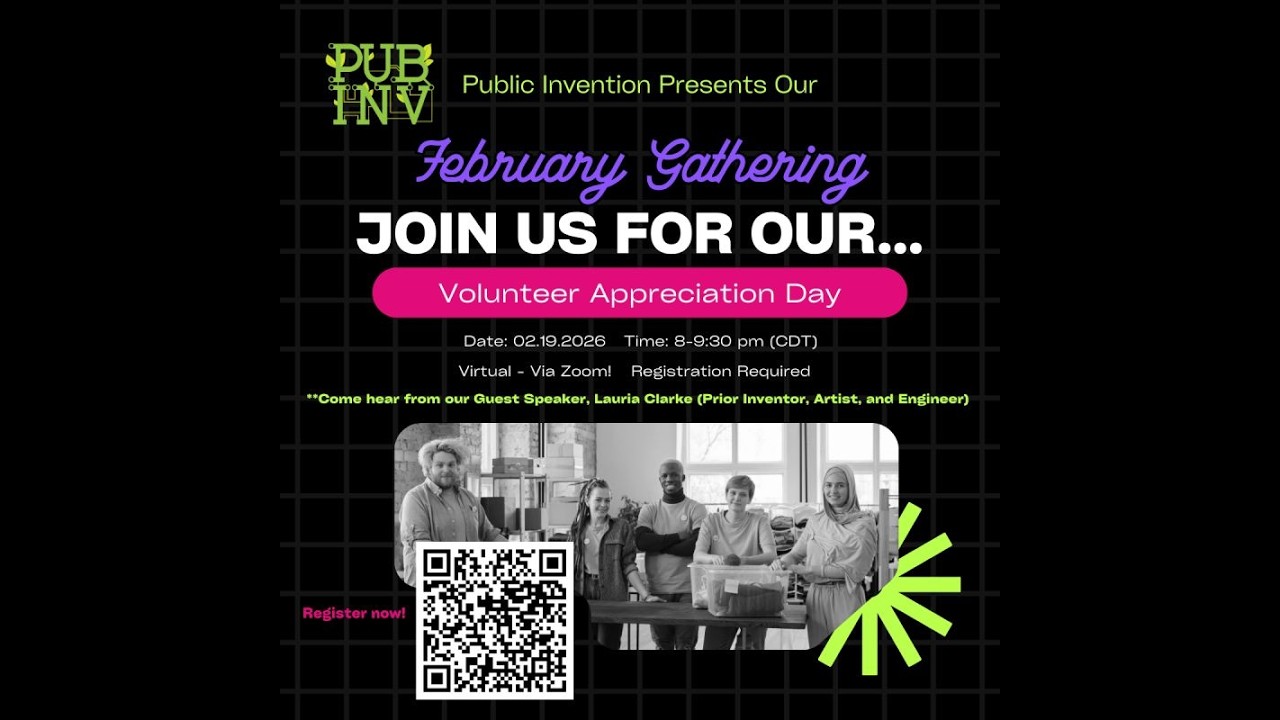
Cadena continues to fulfill her role as an Outreach Coordinator. If you have received emails regarding Inventor Gatherings or viewed the thumbnail images for each month’s event, that is Public Invention’s Coordinator in action!
Gratitude and the Open-Source Mission
Cadena concluded the interview with a note of gratitude for the open-source community and Public Invention specifically. She advised other undergrad students to consider joining the organization to find a mission, and mentors, that help one grow professionally and personally.
“The best community to grow for industry or academics would be starting in open source. There's so many mentors, so many avenues, opportunities, organizations, ours, and even those outside of ours, that are so welcoming,” Cadena said. “I'm sure you'll find something that you're passionate about.”
Most of all, Cadena wished to thank her fellow Public Invention volunteers and admins for building the open-source community into something genuine, special, and long-lasting.
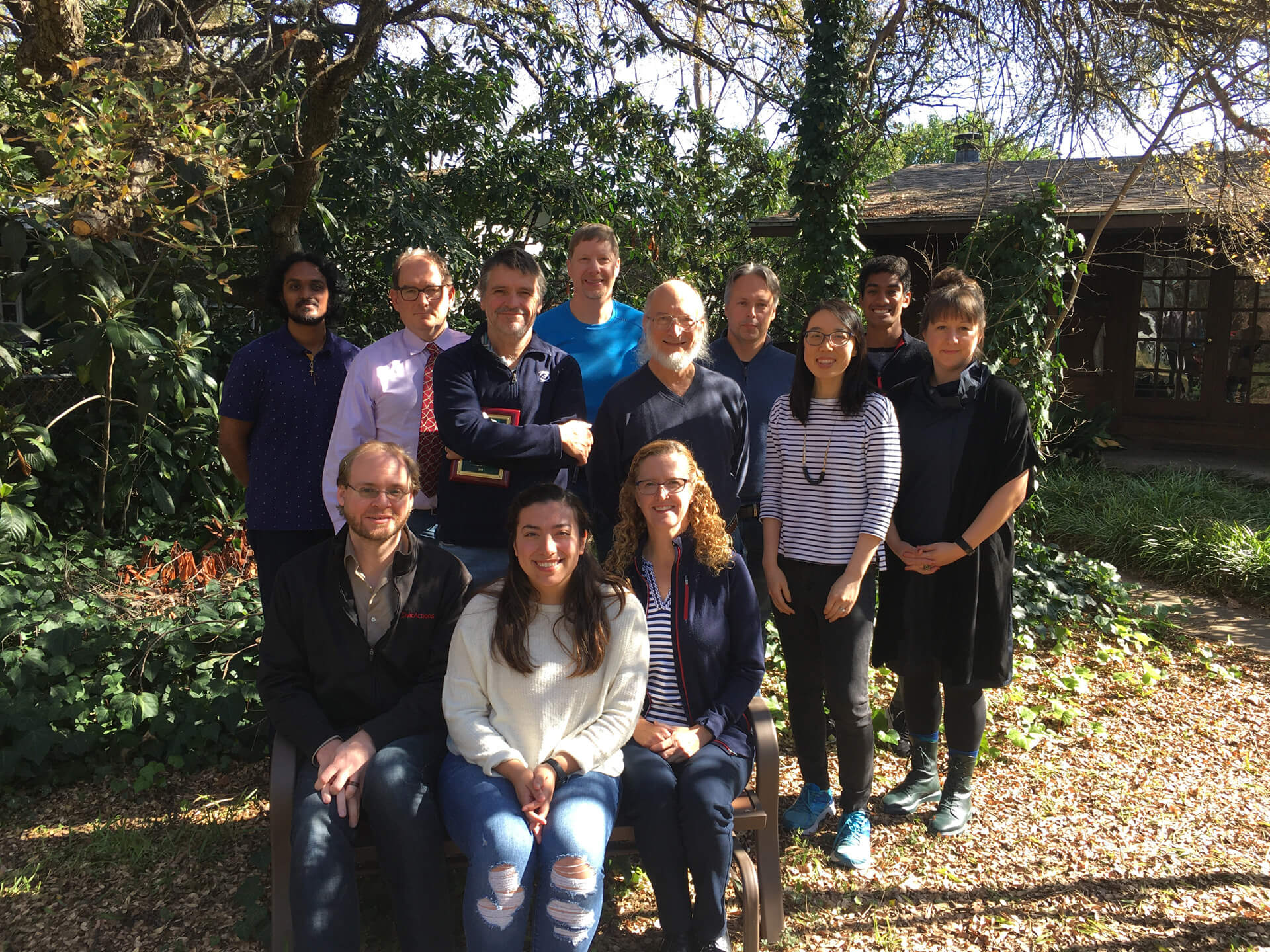
“Thank you to the staff. Thank you to all the volunteers. I am really grateful that I wake up every day and there's an opportunity to work with such amazing people.”
February is Public Invention’s volunteer appreciation month, marked by Volunteer Appreciation Night on the third Thursday. Cadena, among others, received plaques marking their contributions to the organization. Most importantly, Public Invention wants to thank all the volunteers and admin staff, like Cadena, who have continued to promote the open-source mission and invent in the public, for the Public, over the past seven years and many more to come.
We hope to see Cadena and the rest of the Public Invention community at the 2nd Annual Demo Day on June 13, 2026!