Invention Coach:
Public Inventor(s):
Main Link:
Motivation:
The Ventilator Response to Covid-19
The COVID-19 pandemic underscored the fragility of our global supply chains. The PolyVent started out as an attempt, along with 100 other teams, to make an open-source emergency ventilator. It has now become the world’s most open and extensible ventilator.
Our goal was to educate students with a realistic ventilator that is affordable. It has been used in classroom settings, and is a flexible tool for teaching all kinds of biomedical engineering skills, such as those used in capstone projects.
The PolyVent is highly extensible in software, electronics, and the physical modules. Unlike almost any other ventilator, the PolyVent is released under free-and-open licenses, which allow researchers to modify and extend the PolyVent for research purposes. For example, a new tool or a new ventilation mode can be legally added to PolyVent.
We believe we have made an excellent educational and research tool that offers flexibility simply not available in any other way.
Current Access
Check out our open source hardware via this Gitlab Repo: https://gitlab.com/polyvent/organisational
The open source software can be found under the VentOS project tab or directly via the VentOS gitlab link: https://gitlab.com/project-ventos/ventos
Story:
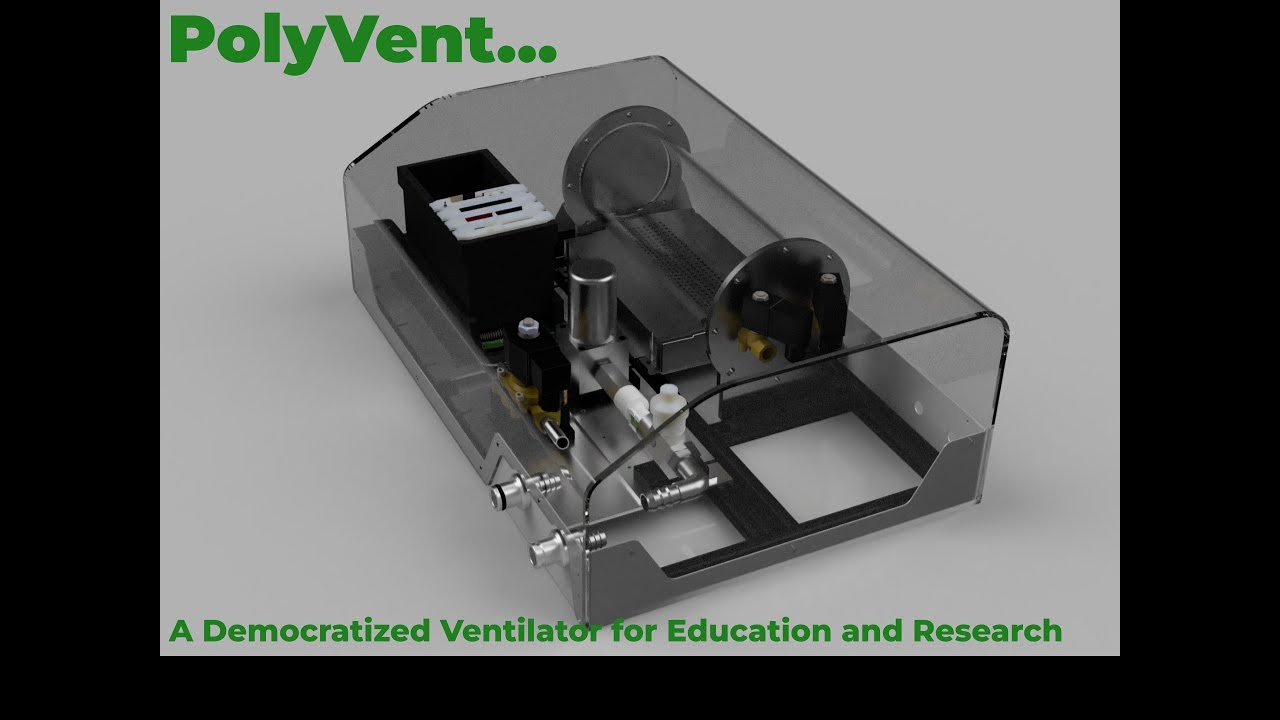
The full history of the PolyVent Educational Platform (PEP) has been given its own page.
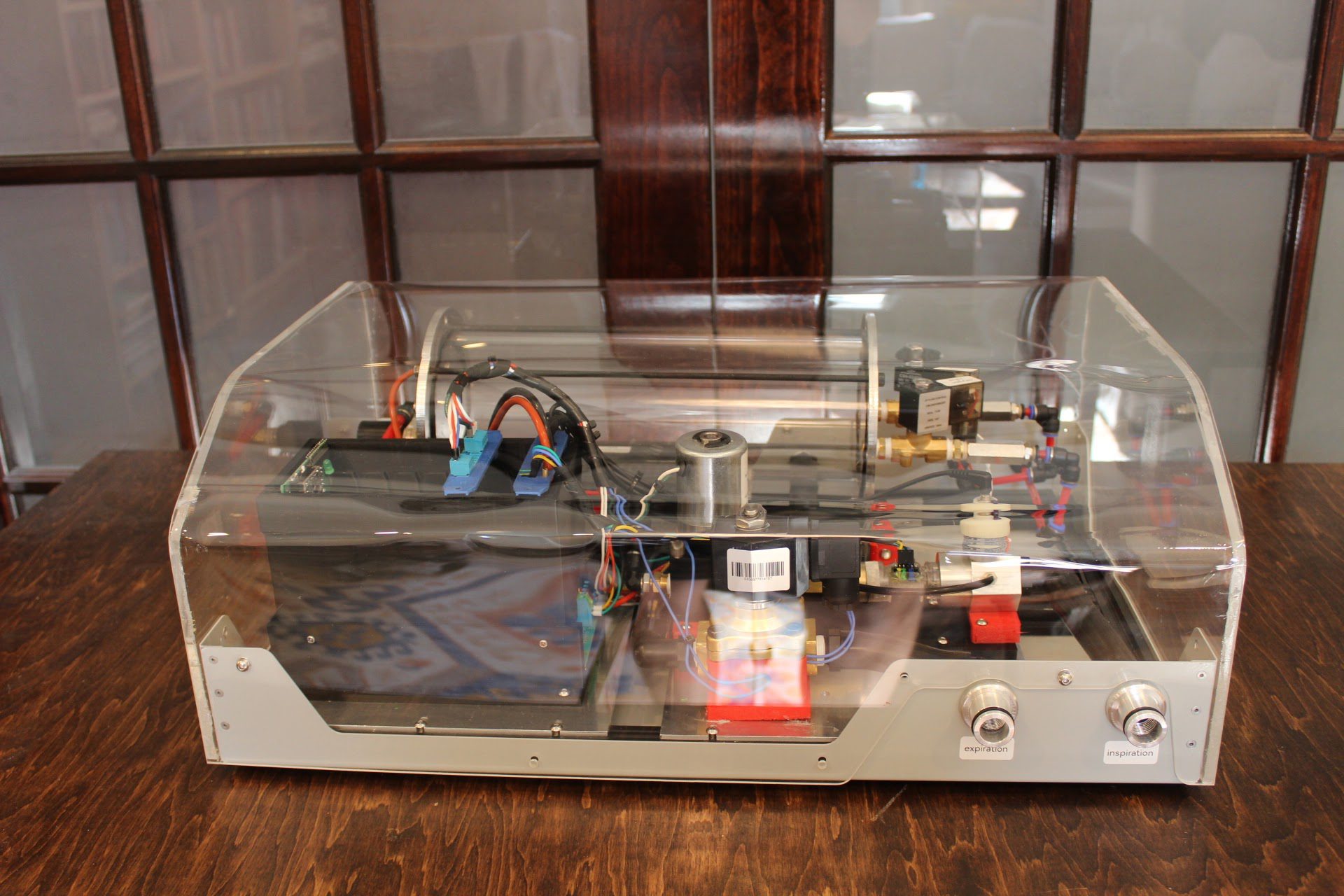
At present the PEP is a complete product ready for classroom, training, and research.
The Story of the PolyVent Continues
We presented our experience with a classroom exercise at the American Society for Engineering Education.
A second PolyVent was worked in in January, 2023, for more development of training materials and classroom exercises. Similarly, a new version of the VentMon spirometer (version T0.5) was developed by Ben Coombs.
An independent team consisting of Lawrence Kincheloe and Lee Erickson has made the General Purpose Alarm Device, and a card that fits into the PolyVent for the purpose of adding alarm capability to the PolyVent.
Related Open-Source Projects
If interested in learning more about other projects, check the following pages for updates and volunteer opportunities:
Status:
Quarterly Goals
The PolyVent Educational Platform is now on sale. Our goal is to place five of these in educational and training institutions in 2023. We particularly hope that these will be used in low- and middle-income countries.
Collateral
Recent Publication in HardwareX: The PolyVent educational platform: An open mechanical ventilation platform for research and education
Photo Gallery


Video
Video

Video